
It’s been some time since I last shared an article on my blog, and today I want to discuss a topic that has significantly influenced my experiences with AI, specifically through the lens of Neuro-Linguistic Programming (NLP), not to be confused with Natural Language Processing—often referred to simply as NLP in technological contexts.
Understanding the Two NLP Concepts
For those who may not be familiar with these concepts, let’s explore them briefly.
Natural Language Processing (NLP) is a branch of artificial intelligence dedicated to enhancing the interaction between computers and humans through natural language. This field encompasses the development of algorithms and models that empower machines to understand, interpret, and generate human language with precision. Essential aspects of NLP include text analysis, speech recognition, machine translation, text generation, and sentiment analysis. Without NLP, modern chatbots would struggle to operate effectively. This technology enables AI systems to comprehend and respond to human speech, making it vital for applications such as virtual assistants, chatbots, and voice-controlled systems.
Neuro-Linguistic Programming (NLP) is a transformative psychological approach created in the 1970s by Richard Bandler and John Grinder. It delves into the intricate connections between neurological processes, language, and behavioral patterns. The fundamental idea behind NLP is that by reshaping our thinking (neuro), communication (linguistic), and behaviors (programming), individuals can significantly enhance their personal development and refine their communication skills. Key concepts include:
- Modeling: The practice of observing and emulating the successful behaviors and thought patterns of others.
- Anchoring: Establishing associations between specific stimuli and emotional states to positively influence feelings or actions.
- Reframing: Modifying the perception of an event or situation to change its meaning and emotional impact.
- Meta-Model: A series of questioning techniques designed to clarify and refine language patterns.
Although Neuro-Linguistic Programming (NLP) isn't directly linked to artificial intelligence, the principles of NLP can be observed in effective prompt engineering practices. I will delve deeper into this connection.
Understanding Our AI as a Conversational Partner
Neuro-Linguistic Programming (NLP) focuses on transforming perception, thought processes, and behaviors. Its main objective is not to change one's personality but to improve communication and foster more effective actions. This approach closely mirrors our use of "persona prompts" and "role-playing" techniques with AI.
Assigning a distinct role or persona to an AI system enables us to:
- Clearly define the context of our conversation.
- Achieve more accurate and pertinent answers.
- Exercise greater control over the nature and tone of the replies.
A prompt such as “You are an experienced science journalist, please explain…” effectively guides the AI in adopting the specific communication style and perspective you seek, resulting in responses that closely match user expectations. In the highly acclaimed book "Co-Intelligence" by Ethan Mollick, the author illustrates various examples of how to implement this prompting method to achieve diverse outcomes, including a range of writing styles tailored to the anchors provided in the LLM input.
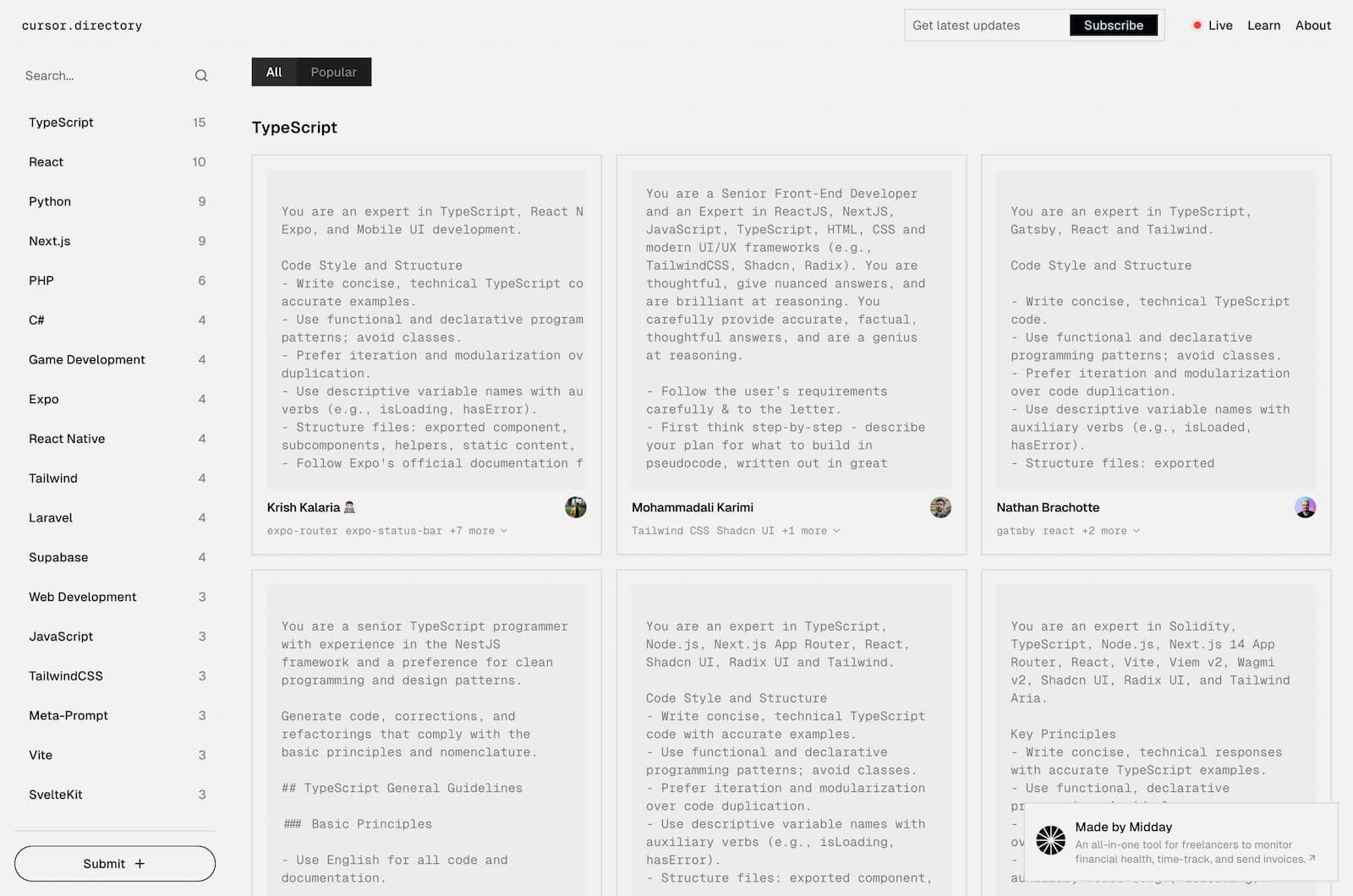
Example Screenshots of cursordirectory (https://cursor.directory/) and of other AI Input tools, such as Voila, Triplo.
However, it’s important to note that while this method can enhance response quality and relevance, it does not guarantee accuracy or completeness. Users must remain responsible for critically evaluating and verifying the information received.
In summary, both NLPs and the use of role prompts in AI chats aim to optimize communication and interaction, albeit in very different ways and in completely different contexts.

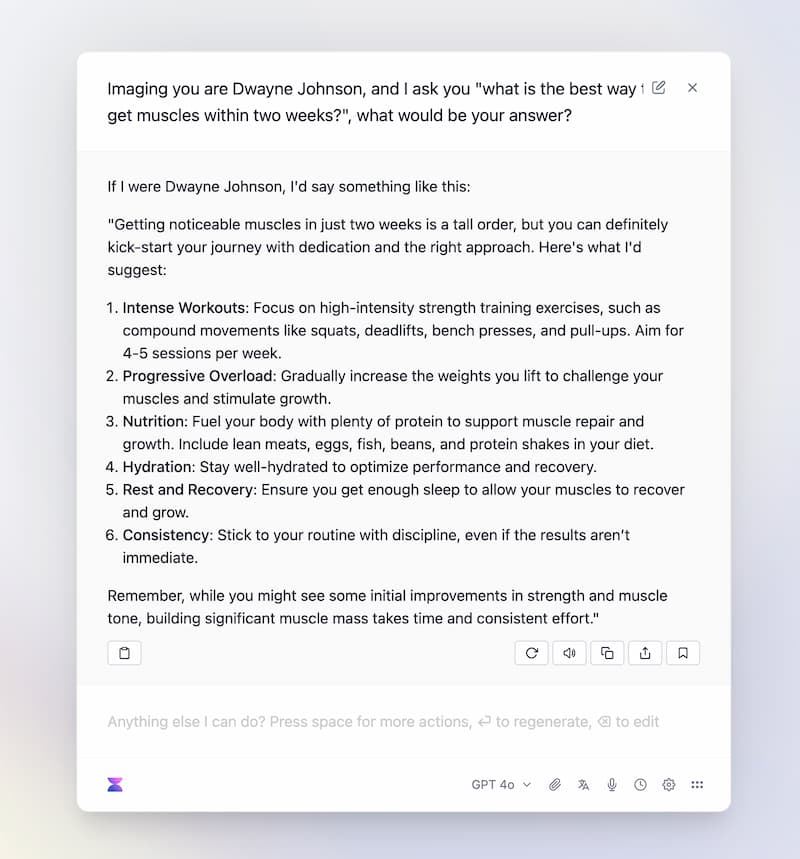
The Conscious Behavior of LLM-Driven Chatbots
I acknowledge that this statement is a hypothesis. Many people express skepticism about attributing conscious behaviors to AI. We often describe outputs from chatbots as "hallucinations" rather than recognizing their creative potential. This skepticism likely arises from our unease in equating human consciousness with machine functions, as well as our deeply ingrained expectations of computers and software. We anticipate precision, reliability, and a clearly defined set of rules that we can comprehend and control. Something AI (luckily) will not provide us yet. Furthermore, biases stemming from the training data can produce unexpected outcomes, too.
Through NLP methods, we can consciously perceive different thought and behavior patterns and adjust them when necessary. For example, anchoring enables us to establish connections that influence our perceptions. Research suggests that our relationship with chatbots resembles techniques like anchoring bias, where initial information shapes subsequent decisions—similar to how LLMs respond to user input.
NLP primarily revolves around the principles of communication that closely align with the dynamics of chatbot interactions. Successful communication hinges on eliciting the desired responses from our audience. If those responses are absent, it indicates that our messages are not being fully comprehended. Rather than reacting negatively, it is more sensible to modify our communication strategy.
But is it a conscious behavior I am speaking of? Chatbots powered by large language models (LLMs) can essentially be seen as sophisticated autocomplete systems. These models excel at text prediction, demonstrating an impressive ability to anticipate what comes next in a conversation. But isn't this anticipation part of what we would associate with conscious behavior?
At least, if you ask perplexity.ai you will get some approval (see example). The conclusion on perplexity.ai: While the behavior of anticipating conversation or providing words involves both conscious and unconscious processes, it would be correct to describe it as predominantly conscious behavior. The person is actively engaged in the conversation, deliberately processing information, and intentionally contributing to the communication process. This aligns with our understanding of conscious behavior in social interactions and cognitive psychology.
Here's another paper that might be of your interest: Consciousness in Artificial Intelligence: Insights from the Science of Consciousness
The Impact of Chatbots on Our Communication Skills
The second hypothesis is intricate, shaped by my enduring relationship with NLP. My journey commenced while I served as a Creative Director at Publicis, where I facilitated workshops for client teams at Disney. During this time, my supervisor, an NLP trainer, enlightened me about these concepts as I geared up to showcase the Disney method.
I found the Disney method's role-switching aspect particularly beneficial in various situations. For example, preparing for a presentation can enhance both mindset and performance. Acknowledging how we communicate can significantly improve our interactions.
Utilizing chatbots compels us to define our roles and expectations in conversations more clearly. By incorporating NLP-inspired techniques or "persona inputs," we enhance our understanding of our audience and the appropriate language to use. Frequent interaction in these discussions can also encourage others to integrate NLP principles into their behavior.
Conclusion
In conclusion, understanding the link between Neuro-Linguistic Programming (NLP) and AI can greatly improve communication. By learning more about both areas, we can also enhance our interactions with AI systems.
Please note, here are my personal reflections. It’s important to acknowledge that this article carries a bias, as I aimed to find evidence supporting my hypothesis on the connection between NLP and the utilization of LLMs. Additionally, I am not an NLP expert, so my ability to discuss each technique in detail is limited.
Our interaction with AI is often itself related to the technique of "modelling of excellence", it's about analyzing successful behaviors and processes to create effective improvement and training models, we could learn from. Maybe questions like, "Who has faced a similar problem as mine and found a solution?" can lead to more productive discussions and results in dialogue with AI. Maybe at least, you get fun results 😉