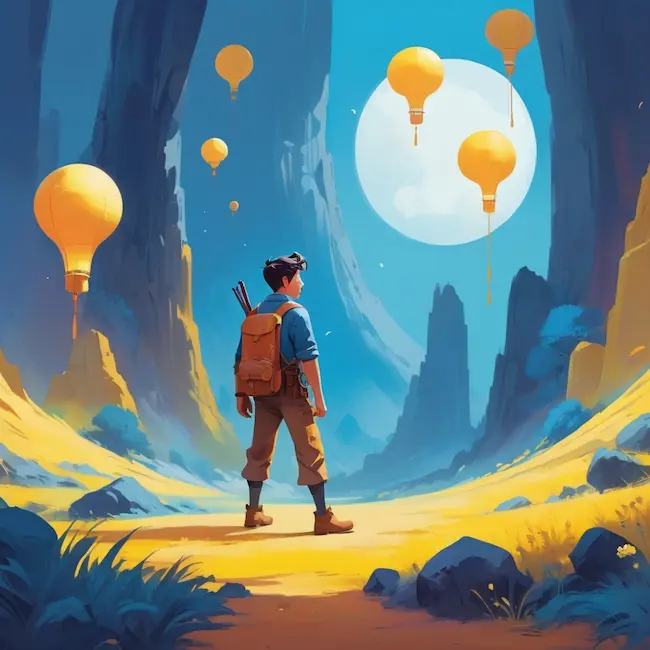
Ever found yourself daydreaming, asking, "What if…?" That tiny question packs a punch. It opens the door to imagination, sparks innovation, and helps us shape our future. "What if" isn't just a question—it's a mindset that creates breakthroughs and personal growth by revealing possibilities we never thought possible.
Recently, I challenged my students in a course on experience design and human interaction with a "what if" scenario as part of their assignment. I'm genuinely excited to see the creative ideas they come up with!
The Power of Imagination
"What if" questions invite us to break free from our routine thoughts and explore beyond what we know. For a moment, they let us view things from a fresh perspective. Imagine a world where gravity works differently, trees grow candy, or communication happens telepathically. These wild ideas can lead to real innovation. Leonardo Da Vinci, driven by curiosity, famously asked, "What if machines could fly?" His exploration of this idea laid the groundwork for modern aviation.
History shows us that many groundbreaking innovations have started with "what if":
- Medical advancements: Questions like “What if we could create a vaccine?” have driven the quest for vaccines and antibiotics, transforming healthcare and saving countless lives.
- Technological breakthroughs: From the internet to smartphones, “what if” inquiries have fueled technological progress, connecting people and revolutionizing communication.
- Artistic expression: Artists, writers, and musicians use “what if” to explore new creative territories, pushing the boundaries of imagination and inspiring audiences worldwide.
The concept of "what if" can also transform our perspectives and unlock creativity. These questions encourage us to think beyond limitations and generate new possibilities for both future planning and retrospective evaluations.
By posing "what if" questions about the future, we can break free from constraints like money, time, fear, and external judgment.
Additionally, applying "what if" to past evaluations allows for counterfactual thinking, helping us learn from experiences by imagining different outcomes. While this can evoke emotions like regret, it ultimately serves as a learning process that enables better future decisions.
In our personal growth journeys or reflective daily routines, "what if" questions can inspire us to pursue passions or overcome limiting beliefs. They can spark curiosity and open our minds to new possibilities.
The Power of “What If” in Design Thinking
Design thinking revolves around finding creative, user-centered solutions that are both desirable and practical. The “what if” question acts as a powerful catalyst in this process:
- Exploration and ideation: Asking “What if we designed a product that…?” opens doors to new possibilities and encourages us to think beyond the obvious.
- Challenging assumptions: Questions like “What if we did things differently?” allow us to break free from conventional thinking and discover innovative approaches.
- Empathy: “What if” encourages designers to step into the shoes of users, imagining their needs and challenges. This empathy fuels the creation of designs that truly resonate.
By consistently applying “what if” questions throughout the design thinking process, designers maintain a cycle of ideation, prototyping, testing, and refinement. This iterative approach fosters continuous improvement and innovation—core principles of design thinking.
Embracing the Power of Possibility
“What if” is more than just a question; it’s a mindset. It represents a commitment to curiosity, innovation, and the belief that anything is possible. By embracing the magic of “what if,” we unlock the potential to shape our future, one imaginative leap at a time. Especially nowadays, being faced with a world being taken over by AI, it is so valuable to look at different things from a "what if" angle.
My next post is supposed to give you an example on that "what if" angle in the context of design and studying. As "what if" is kind of the perfect entry to creating a hypothesis to test.
Let’s explore the transformative power of “what if” together in my next post.