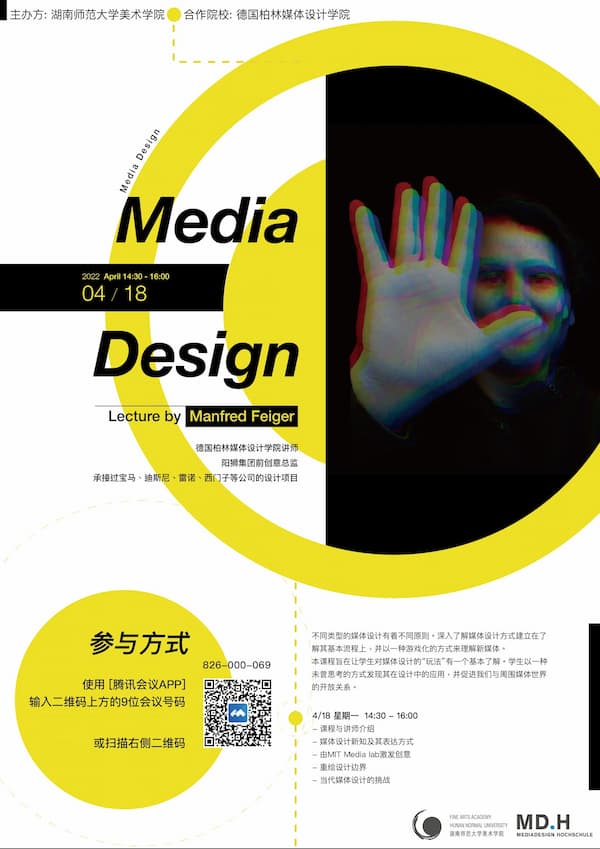
My roots in teaching
For any of you, who don’t know, I am teaching different fields of design since 2007. In my case I would call it a hobby, besides my life in agencies or self-employment. In some years it was more intensive, and I took more courses and in some I was lazy and only did some bachelor supervisions.
Since my start, I shared know-how in the fields of flash, yes, that awesome tool to create web beauty before Apple killed it in 2010. I taught the media lab and since UX got more popular, in the last 5 years, my courses mainly focused on User Science, Interaction Design and Interface Design.
This year I got the great opportunity to teach at another university.
Hunan university (HNNU), in China has a cooperation with Mediadesign Hochschule in Germany and so I was asked to teach undergraduate students about media design.
Challenge accepted.
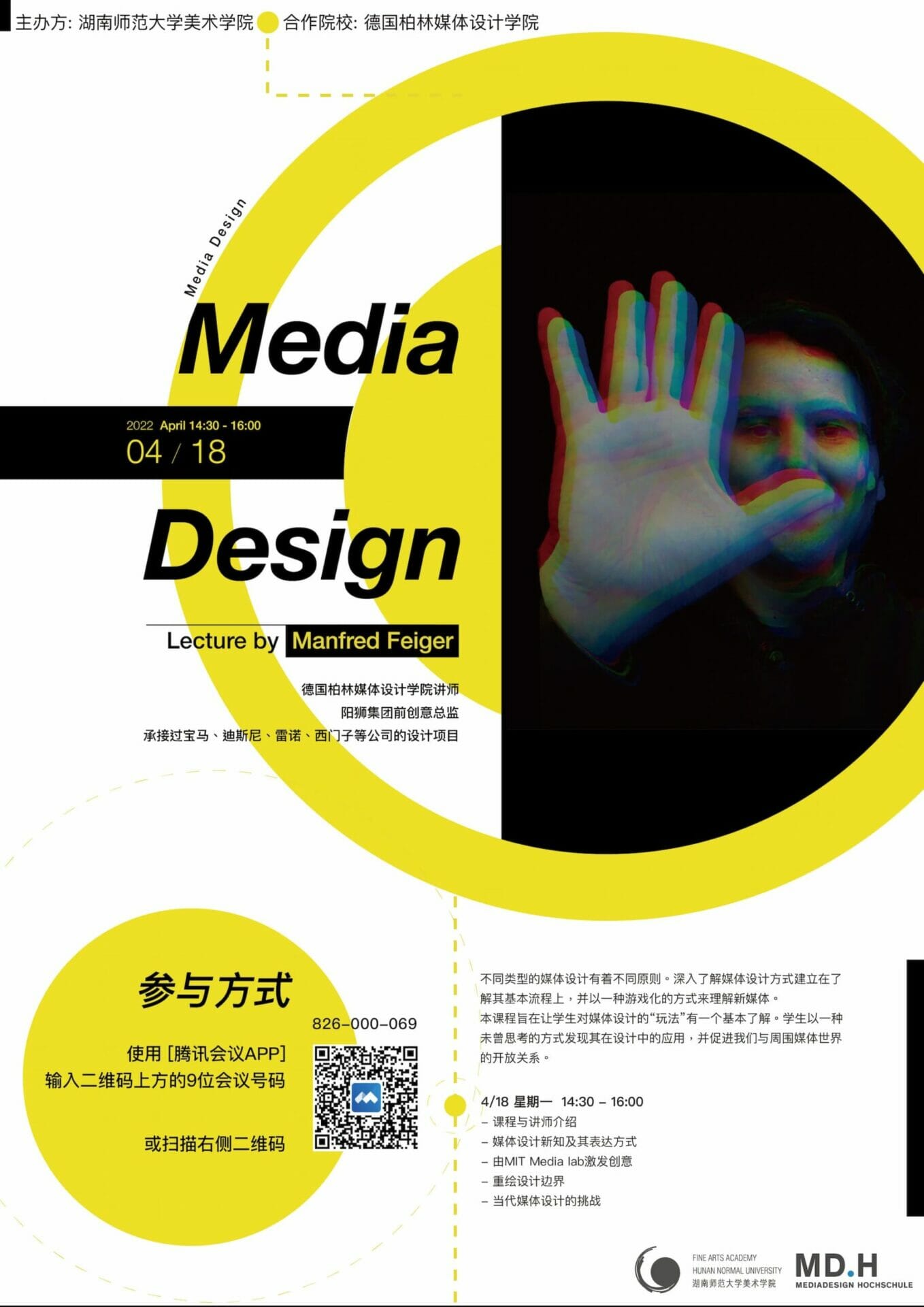
As you might know from former articles here, I am influenced by the thoughts about 21st century design education from Don Norman and as I had to prepare an almost completely new script, I incorporated some of the thoughts being discussed in the article Changing Design Education for the 21st Century in She Ji Journal.
To give you an understanding of the situation, I start with my challenges in the preparation of the course.
Article overview:
Preparing for the unknown – media design course
Preparing a “new” course is easy if the topic you teach is limited to certain aspects. User science for example focuses on everything on a theory level about users, about usability aspects and the application of the theory and measurement.
Speaking about the topic of “media design”, we have a topic that isn’t defined that clearly and has a huge range.
It starts with simple things: If I teach in German, German language applies and the cultural understanding of my domain, about what the lecture topic and the scientific base, dominates. Teaching in English, one (or at least it was my requirement) must cite English literature (as well) and align it to the scientific base of that domain.
Design and Media Science are rapidly evolving fields that intersect in the realm of media design, making it challenging to strike a balance between the two. I was surprised to learn that German and English literature, particularly in media science, have distinct focuses, with only a few prominent figures like Marshall McLuhan having overlapping influence. The exploration of this new theoretical foundation has been truly exhilarating for me.
You may be wondering why I am discussing English instead of Chinese. English was the prescribed language for the course. Although I attempted to gather information on Chinese media history, my outsider perspective required me to shift my focus to the English context. It is truly captivating to discover the challenges of immersing oneself in a different cultural domain. In addition to English, the course also provided Chinese translations for all of its content.
In other words, my feedback loop, or my approval, lacks, as I can’t understand what is really being said and if it’s correct or not.
Even though I am currently engaged in various consulting projects, my mindset remains that of a designer. Therefore, I willingly embraced the design challenges and organized the lecture based on fundamental principles of excellent design. It was essential to comprehend the target audience, understand the intended goal, and establish certain limitations to commence the process. Throughout the journey, I encouraged experimentation and iteration as I firmly believe in their value. Interestingly, these very design principles were seamlessly integrated within the lecture's content, reinforcing their significance.
Online lectures with a language barrier
Overcoming the language barrier is no simple task. It's important to acknowledge that the traditional format of a lecture, with one person reading from a script while others listen, feels outdated and antiquated. The constant interruption caused by translation breaks disrupts the flow of the lecture. While learning English may have its benefits, it poses additional challenges in maintaining the momentum of a course, especially from the perspective of the instructor.
I believe that practicing the material in both English and Chinese could be beneficial for the students' memorization.
Online lectures have become an essential part of education, thanks to modern platforms like YouTube. Traditional lectures in universities can greatly benefit from these innovative teaching methods. Especially during the COVID-19 pandemic, when isolation at home has become the norm, engaging with a screen may not be as enjoyable as in-person interactions. To adapt to this new medium, I have redesigned my lectures, aiming to bring back a sense of enjoyment for my students. However, when teaching interaction design, it feels incomplete to not be able to demonstrate real-world examples such as Nocki or Leap Motion.
In my special case about Media Design, it was clear, I couldn't expect everyone to wear a VR helmet. To improve my lecture, I did some research at the beginning, if I could add some subtitles while using a live translation. I ended up applying a live translation, as being described here (use google translator to understand the basics!). Then I added the subtitles via OBS to have the basic setup of my lecture.
As my topic was about media design, I also wanted to include some mixed reality features, to make the content being presented more tangible. So, I tested some stuff upfront, such as a simple gesture-based machine learning to use body movement. Therefore, I recommend looking at Daniel Schiffman’s video on “Zoom annotations with machine learning + p5js” on YouTube. Finally, I used the simpler tool snap camera and added it to my OBS layout.
My setup in OBS looked something like this:
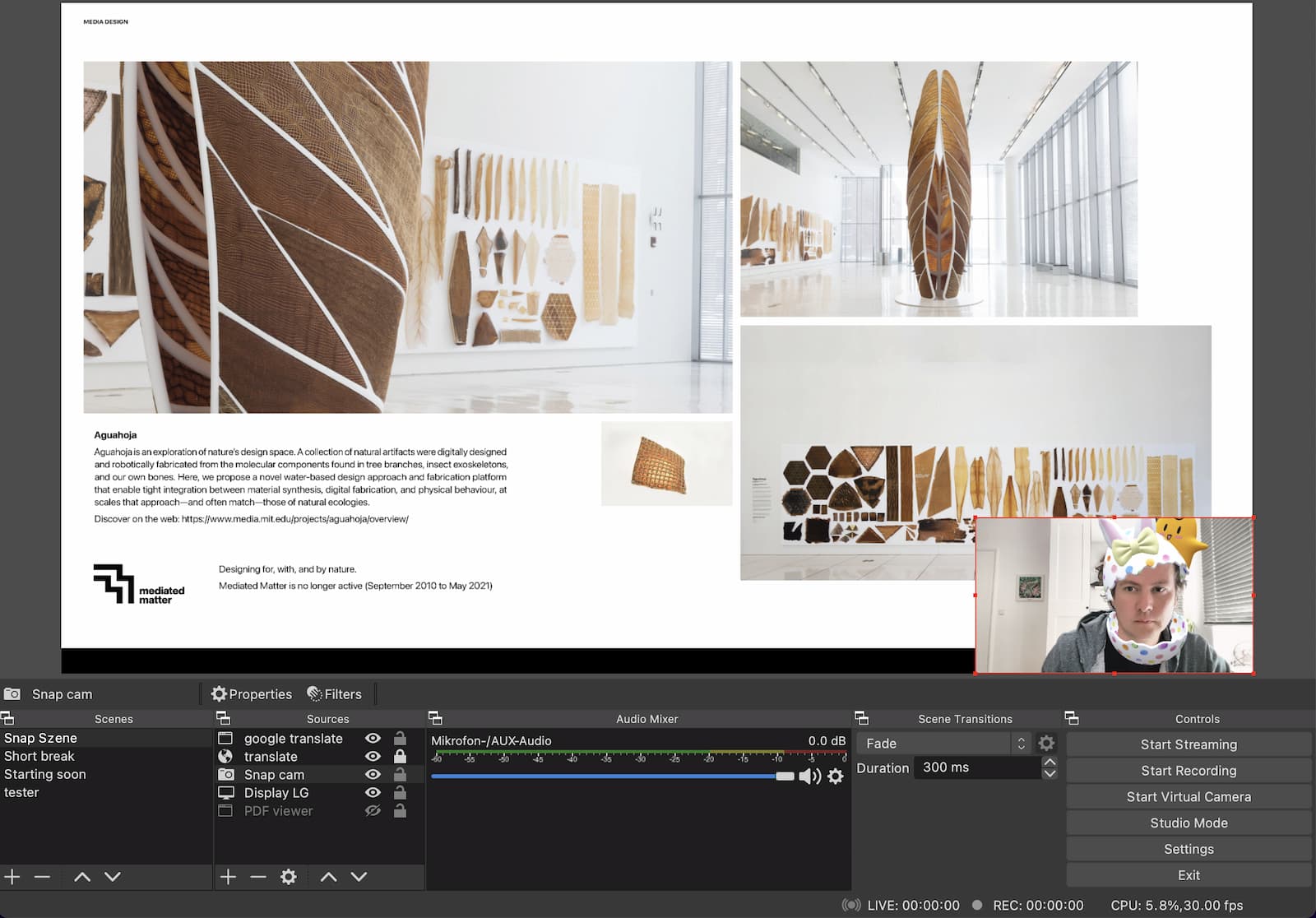
While doing all the preparation on the “design” of my lecture to communicate my contents, I thought it would be a good idea to do some live experiments, like what I configured myself with all my OBS, google translator – live translation and ML or Augmentation tests.
Teaching media design in best case needs an understanding of topics, such as interaction design or user science to dive deeper. In my case the students only did classical design disciplines such as typography, colors,... so far and my task was to give them an entry to the world of extended realities, of media installations in all shapes, of all variety’s media could be combined and designed.
Giving them a good sense of failing is part of working with so called new media, and so I made it part of my lecture.
And yes, I also failed right at the start, as the tool we used for teaching, voov couldn’t be assigned with a virtual camera. So I needed to present the little test with a simple screen sharing, as it’s fun to see how students react and a good icebreaker to explain media design with a multimedia example in real time.
In terms of our language barrier, my translator Yuwen did great, as far as I am even able to judge. It also felt quite good after 2 weeks to have a wing-woman with her as a translator.
In fact, I had many wing-women around me. Miss Dr. Sun did great in guiding the preparation and sometimes she had the chance to join our course, she could also share some of her research know-how, when I presented different design processes.
In China, we were fortunate to have local professors who provided invaluable support in coordinating the activities of the 80 students. It's hard to conceive of a course in Germany receiving such extensive assistance. It seems that here, students are mostly expected to navigate their academic journey independently.
To finish the chapter of the language barrier, here are some other experiences I had, while doing an online class:
- Be prepared that your translator might be lost (without connection) – improvise, use chat, and have some translator window open, to keep the flow going. You will get responses via the chat.
- Written communication works quite well in English. Even the use of google translator to copy some Chinese content helps.
- Students are shy about speaking in English, but their skills are good. Facilitate speaking!
Speaking about online lectures in the context of media design:
- The thought of virtual universities with large scale listeners in even virtual spaces is already here. I guess the concept of local universities is endangered. Of course, I would have loved to give the students the chance to experience some medial or interactive expressions in real, but depending on the course structure, it is not essentially required.
- Also, VR Classrooms are not that far away anymore. While teaching at larger scale abroad, one starts questioning ways we teach now: to value diversity a new VR Classroom doesn’t mean, that only the “super experts” will hold the lectures in the future (mostly those are not the best lecturers anyways), but I assume the number of lecturers could be drastically reduced. As mentioned, many experts aren’t the best lecturers.
- We even thought about this topic in the context of the UN sustainable development goal of education – worldwide online lectures are a mean of “Ensuring inclusive and equitable quality education and promote lifelong learning opportunities for all” and if students won’t have to move to the expensive cities one might also help rural areas to survive better.
- Teaching in China really needs awareness, that there is a wall, a firewall that blocks many URLs! Show the links while sharing the screen or find other ways of distribution, so not only the ones with a VPN could get access to the information.
During the course – Developing ideas for the UN sustainable development goals
With the start of the course, an adventure started. First there was an open lecture. All the contents were available for the translator in advance, so we could have a good, smooth run.
Getting feedback from the students felt like the hardest challenge. As expected, it needed some time, but in the end, I was quite happy with all the dialogues. I would even say I am grateful. I could learn a lot. The real magic of integrating topics that are relevant for society unfolded its beauty throughout the course.
Learning targets
Before I go into this magic, a brief understanding of what my goals for the course were:
- Show diversity of (media) design.
- Show overall underlying principles in terms of process.
- Show inspiring examples from the intersections of design art and technology.
- Reduce fear of design students playing with new technology and give them an idea of how something got created.
- Give students the understanding that media concept is mostly the work of groups of people and give them the chance to work with ideas.
You see, there’s no goal that is directly connected to the UN sustainable development goals. Teaching for undergraduates should facilitate transfer thinking from my point of view. They need some basic skills, but the rest is about giving them a broader view.
Reflecting some of the writings in She Ji magazine, I wouldn’t change the education of designers entirely, especially for undergraduates. As I said, for me, teaching at university needs to facilitate transfer thinking.
If you want to get a view from a climate perspective, download the “new wave report” of Climate Designers.
If you remember the quote from Victor Papanek in my article “Design for the 21st century with Don Norman” or if I refer to Gunnar Swanson, who also shared an article in she ji “Educating the designer of 2025”, speaking of “Thinking through Making”, there are many pieces I incorporated in my course. I also believe in learning through doing. A good balance of theory and space for transfer thinking to apply learning to acting.
So I applied a glimpse in many different applications of design, examples from the MIT Media Lab to modern AI Art, from historic examples (in their context) to real applications I did myself in my agency life.
Speaking about Media in the context of design, we speak about an ever-evolving landscape.
Luckily many contemporary topics, such as NFTs, generative Art or Design, VR, Games, to name a few, were all interesting for the students as they could relate to them. In the end it is my target group, I am addressing the course, so I adjusted most of the content for them.
Final examination: Ideas for the UN Sustainable Development Goals
As I struggled a bit defining a good topic for evaluating the output of a four-week (5 days a week) course in media design, I fell in love with the idea to use the UN Sustainable Development goals quite early.
I could include research topics to identify an insight, one could facilitate group work, ideation, and sketching skills of the students. In any medium they wanted. Whether it be a product, a campaign, or a piece of art.
If you are not familiar with the Sustainable Development Goals, feel free to take a look at their website.
It was an experiment. And in my point of view, a success.
I introduced this overall, final challenge directly in the first week. And I guess most students had no idea what they were supposed to do (and that was intended). I showed them pictures of an unknown versus a linear path and many examples from the Cannes Lions submissions in the category of sustainable development goals.
Then I went back into media design theory, some media art history, and contemporary examples till I did some more hands-on exercises. Earth Day was the day to introduce them to the Disney method and to practice a brain writing exercise in their teams together.
During this first Challenge, the earth's day brain writing, the magic of ideas already unfolded. Besides the simple and great idea of having a worldwide holiday for the sake of our earth, many other sub-ideas were generated.
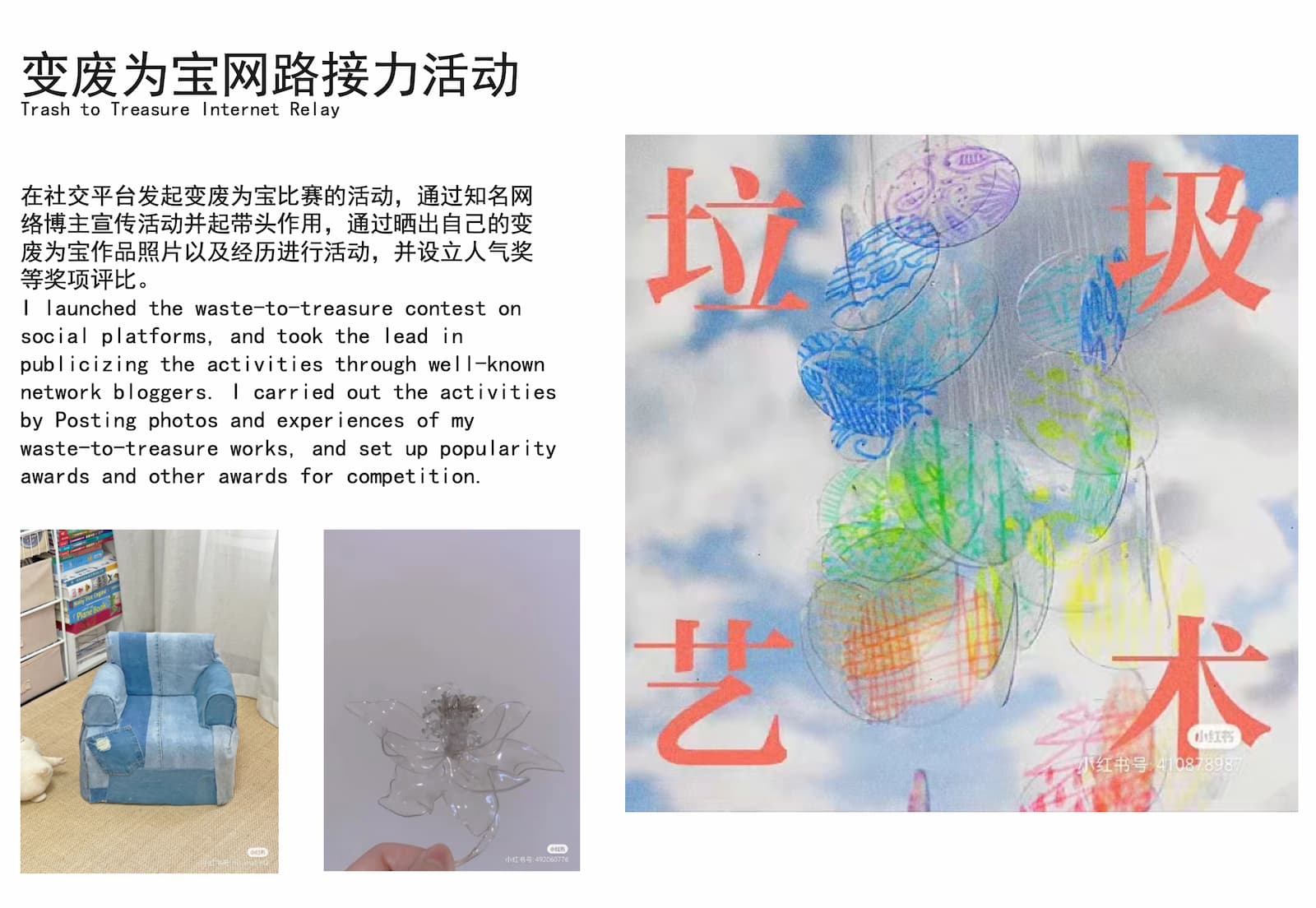
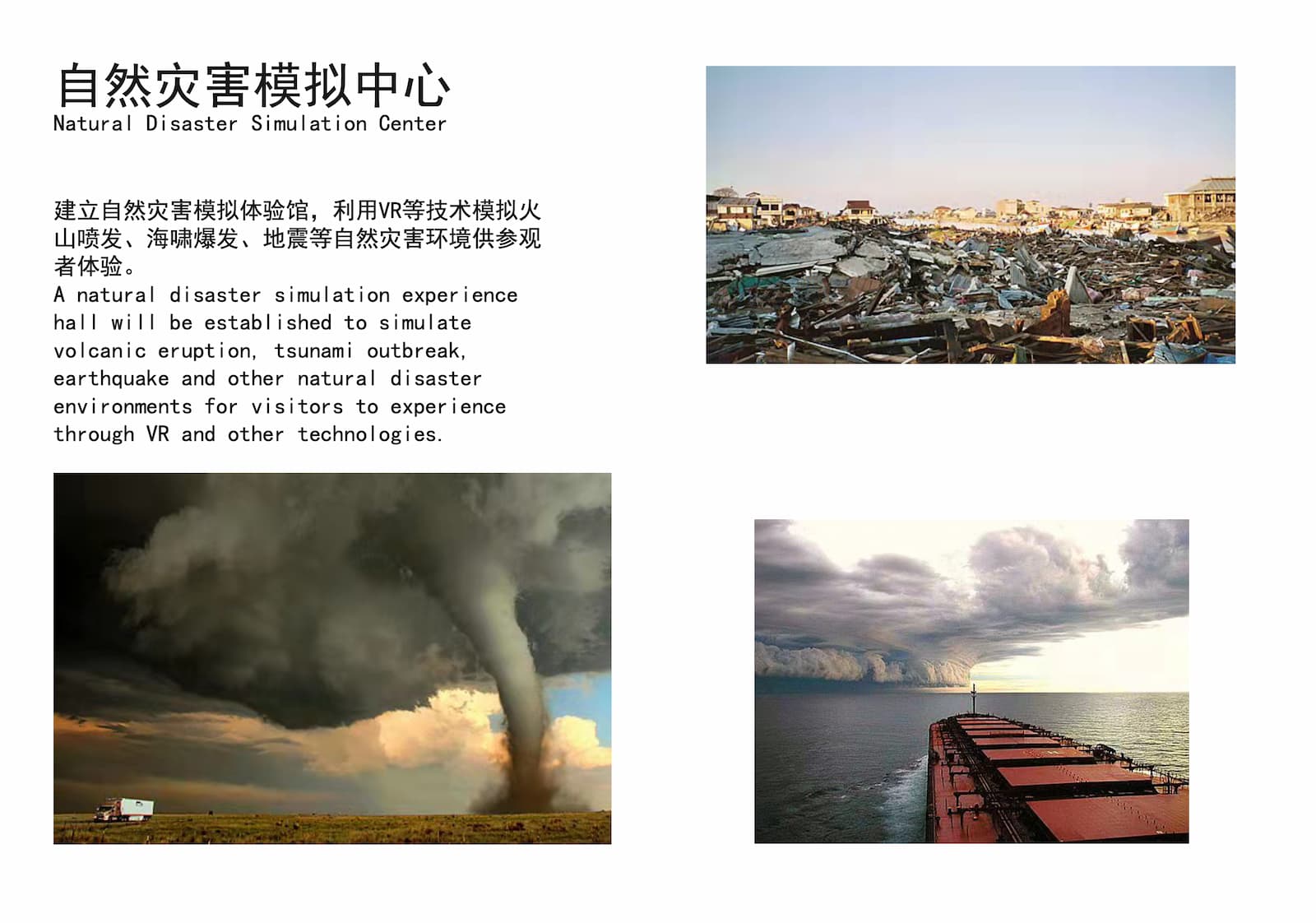
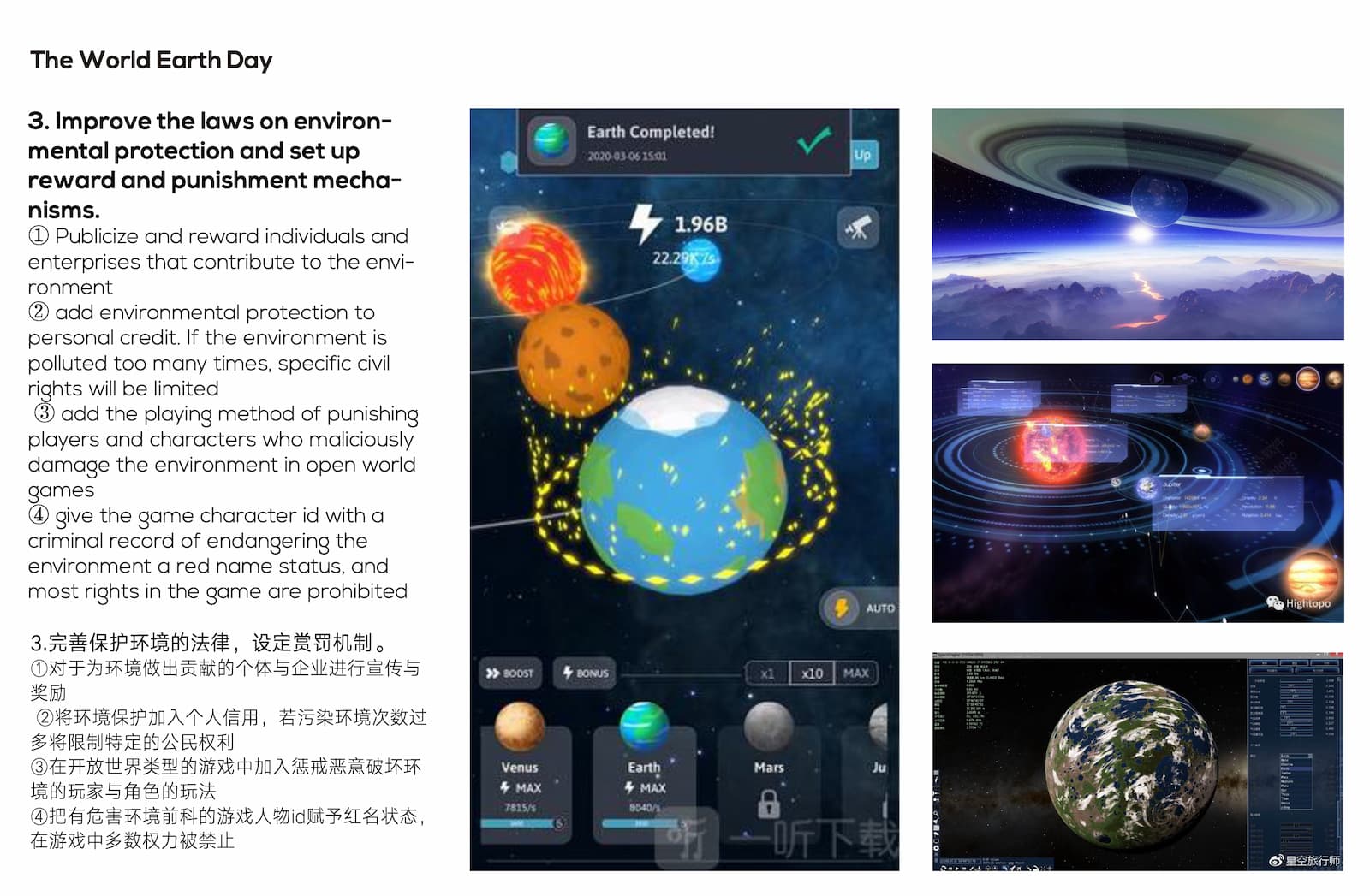
The following weeks included more theory, such as the thoughts of Neri Oxman and her krebs cycle of creativity or the general distinction between art and design. Till we went into the process of the conception itself: Showing own, real-world examples from my time being Creative Director at Publicis (Pixelpark). Most examples were selected for not showing “Advertising” as people know it, but creating products, events or translating ideas into unexpected results.
Many beautiful examples the students shared, accompanied the way till they learned about design processes, whether it be human centered design or the double diamond and many methods they could apply, such as design thinking or simpler ones, such as the re-framing matrix.
During that time, the students should focus on getting an understanding of their chosen topic from the UN sustainable development goals and explain why they chose it. As expected, the groups behaved completely different: visual focused teams, didn’t collect many insights and directly thought about executions, some didn’t break down a complex topic (such as climate change in general) to smaller junks and some were completely lost, to get started. Only one group completely followed the brief from beginning till the end.
There was a great dynamic during the consultation we had. What followed reminded me more of my activity of being a Creative Director, as a lot of moderation and ideation in real time was needed to facilitate the groups work.
Most groups really got the flow after the first consultation, and it was so beautiful to discuss with the groups. To speak about the Shanghai lockdown, about gender topics, about observations in their surroundings, about the general situation of our world.
I experienced the students as very motivated and passionate. It was great, and I would recommend for everyone to select topics that are relevant for society more often. As a teacher I am most happy if students make progress (themself), if they deliver unexpected things and surprise us as teachers with their personal development, reflected by their work. And the students paid me back all the things I love being a teacher.
To output the ideas, I chose the format of an idea board one knows, if you ever participate in any design or advertising award. The ingredients of their final idea board were:
- Challenge
- Idea / Solution
(The last point could also be spitted into two points)
During the course the students could share their whole research. Some teams did interviews with affected groups, and most did great research work to narrow down the topic. As mentioned before, the danger for designers is mainly to run directly for the execution. This is not different from professionals, so one group really executed their idea, though it wasn’t needed as execution.
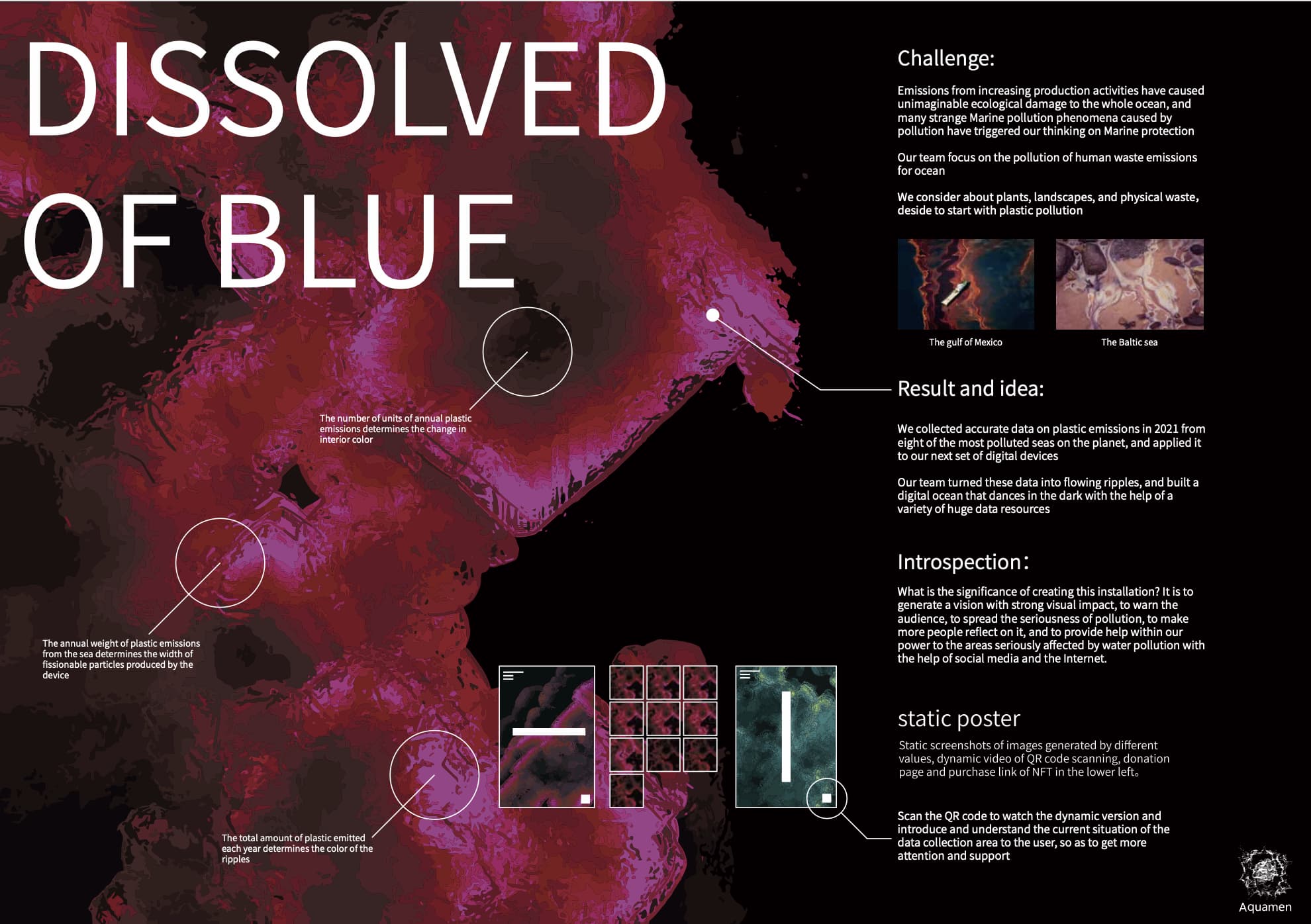
As the mentioned group also loved the work of Refik Anadol, they went for artworks being generated by real pollution data of the oceans. Along the way they taught themself touchdesigner and created an animated piece.
Though I could mention that generative design and extended realities were also later chapters in my course, and I also had examples in touchdesigner, besides p5.js, the real skills to finish their artworks were acquired themself. Other groups learned 3D programs only to visualize their idea. It was fantastic, as they applied the true sketching skills every designer needs to have… being flexible in thought to transport ideas.
Learnings from my course – 21st century design education
- Integrating current challenges, such as the Sustainable development goals in a course are recommended. Students feel motivated to work on them.
- The intercultural exchange, teaching in another cultural context, is great. Working on ideas around topics of society, even better.
- Design students have the skill to sketch, to sketch ideas, to make them visually tangible. These skills help in the development of ideas around topics of society.
- To understand the context of the problem it is crucial to start as early in the education as possible with more skills on research. The tendency for designers to go for an early execution is present and dangerous.
- Teaching Designers to fail early helps them to be flexible and think iterative
- Designers are culture makers – they create the world around people by helping them visualize their needs, fears, and hopes – but they don’t only visualize things, they could also help to overcome aspects, as they translate ideas into something that makes them tangible for all.
Some results of the course Media Design
You might have noticed that the students were also asked to share inspirational examples themselves.
Being a creative, it’s always a great way to get an understanding of the group, if they share what they like. I personally hoped for a lot of hidden gems from China, but most of the examples had no border and were from everywhere.
Having 80 students one gets a great variety of examples. There were many examples I also like and know, such as works from Olafur Eliasson, Adrien M & Claire B, Maotik Studio, SETUP, Saul Bass, Tobias Gremmler or Moment factory to only name a few.
Some (for me) unknown pieces were also shared, so we had work from MOTSE, Naufan Noordyanto, E-Go and Dabeiyuzhou.
Looking at some results of the Sustainable Development challenge and the final examination also makes me proud.
The first example is an idea around the topic of ocean pollution, this is the group that learned touchdesigner, to do the visualization. They also thought about a data mapping for the visualization. If they connect it to a NFT gallery, I will share the link here as well.
Dissolved of blue
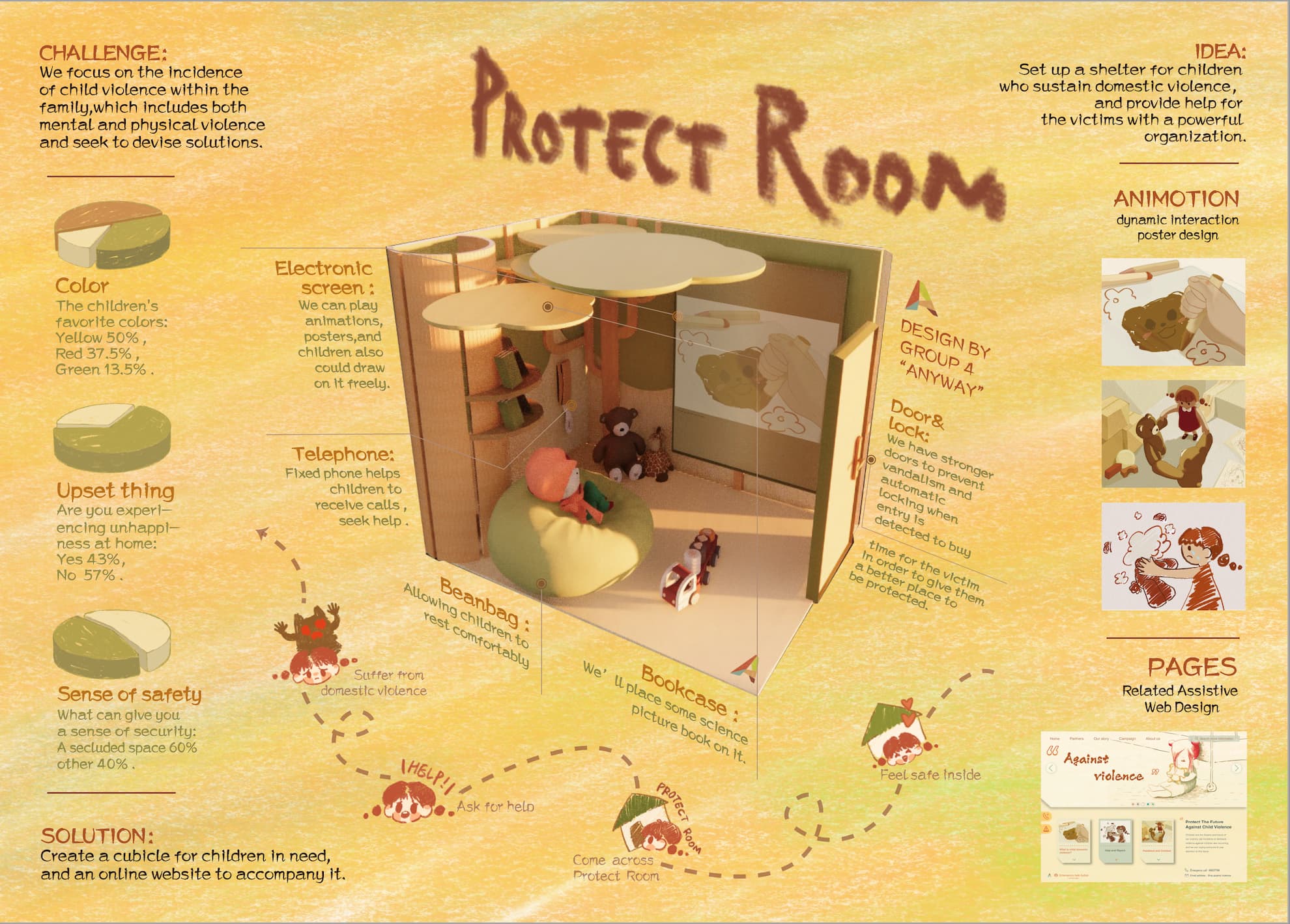
The next example deals with the topic of violence against children. They learned some 3D skills to get the visualization going:
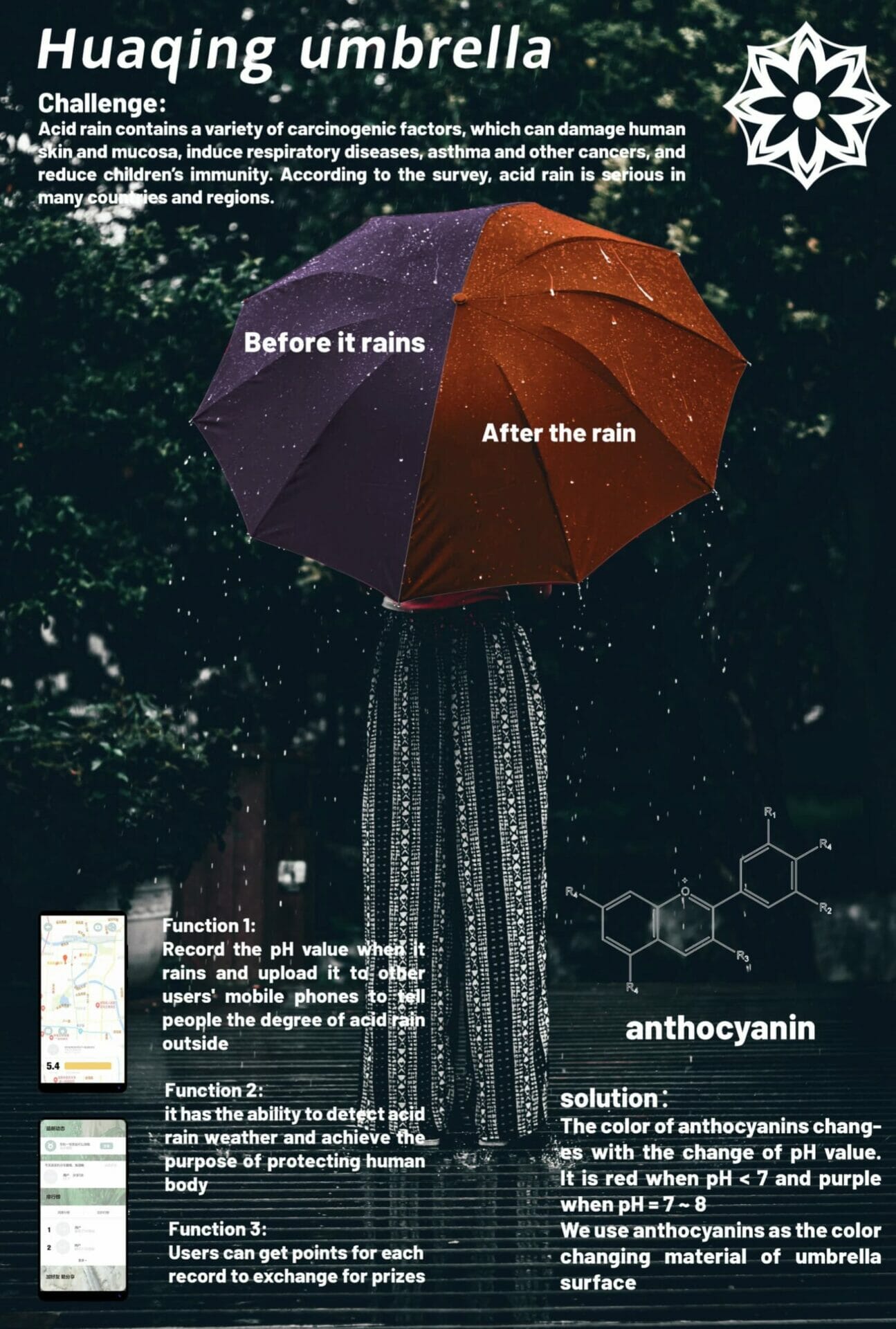
Here’s another simple, great idea. Umbrellas detecting acid rain and working with the data. As you see, the visualization skills are more undergraduate. But in terms of the idea, it’s a great one!
My final thoughts are still gratefulness and how beautiful it is to see designers working on ideas to make the world a better place.
By heart, I wish the students all the best and I hope this beautiful generation of students will create an impact on the world.
Teaching in another cultural context and working on topics of society is great. I really recommend applying topics of society to design courses that are not closely connected to a certain skill, such as typography or interface design. Maybe design education for the 21st century is that simple, every three to four semesters integrate some opener module that helps to understand design as a concept from a broader perspective and give the students challenges that are connected to their surroundings.
Happy teaching!
This Article was mentioned on manfred-feiger.com
This Article was mentioned on manfred-feiger.com